
Accurately Price Your Home: 10 Steps for Success
Price It Right — Sell with Confidence

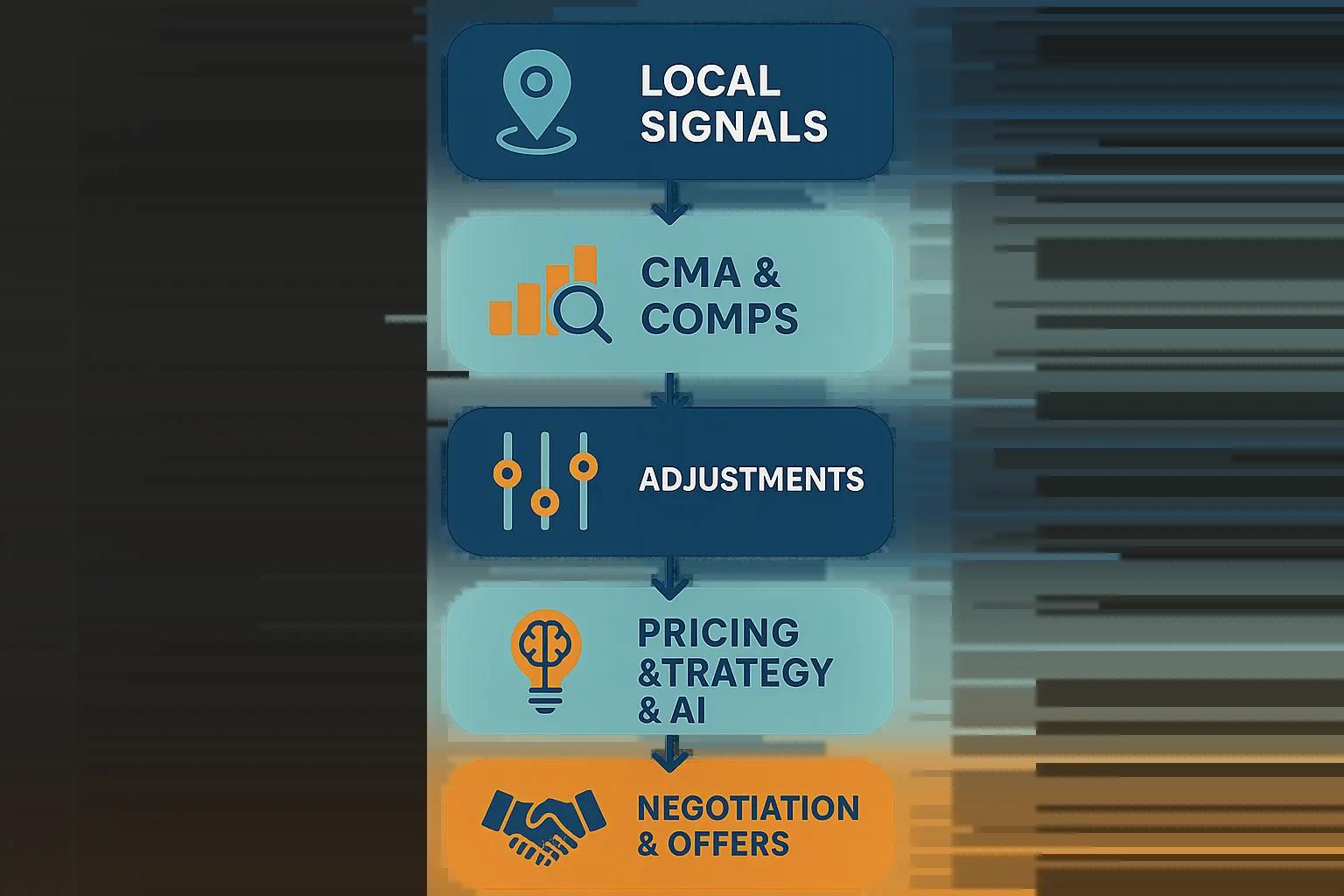
Picking your asking price is the single biggest decision you’ll make as a seller: the list number shapes buyer perception, traffic, and ultimately your net proceeds. This guide gives you a practical, data-first playbook for landing the right price. We walk through local market signals, a disciplined comparative market analysis (CMA), when to order a professional appraisal, non-market value drivers, and pricing tactics that balance speed with proceeds. You’ll learn how to choose and adjust comps, which renovations typically pay off, how AI and predictive analytics can sharpen your estimate, and the negotiation margins you can expect across market conditions. We’ve included reusable checklists, EAV-style tables, and clear rules for adjusting price after market feedback — use these with your agent right away.
How local market trends shape what buyers will pay
Local market trends set the demand-and-supply backdrop that turns a suggested price into real offers. Buyers respond to available inventory, selling velocity, and recent sale precedent. Monitor inventory levels, days on market (DOM), sale-to-list ratios, and short-term price momentum to inform both your starting price and your marketing plan. Those signals explain why nearby, similar homes can sell above or below list, and why pricing to sell quickly looks different from pricing to maximize proceeds. Read local behavior first, then pick comparables that reflect today’s market — not old outliers.
Key local market indicators to watch include the following:
Inventory levels: Low available listings usually support higher asking prices when demand is steady.
Days on Market (DOM): Shorter DOM indicates stronger buyer activity and supports more aggressive pricing.
Sale-to-list ratio: A ratio above 100% signals multiple-offer or seller-favored conditions.
Price momentum: Accelerating recent prices justify a higher list; slowing momentum calls for conservative pricing.
Quick takeaway: read inventory, DOM, and sale-to-list ratios together to decide whether to price aggressively or conservatively, then use those signals to pick your best comps.
Predicting Days on Market for Real Estate Sales Strategy Optimization
Estimating days on market helps you tailor sales strategy and timing. Seasonality and short-term shifts make listings unpredictable; accounting for these factors improves both pricing and promotion decisions.
Predicting days on market to optimize real estate sales strategy, M Castelli, 2020
Current supply and demand dynamics in California
Supply and demand still vary widely by submarket in California. Coastal and amenity-rich neighborhoods tend to show tighter supply than inland areas. Mid‑2024 conditions revealed pockets of strong demand and constrained inventory — where well-priced homes draw competitive bids — while other areas show lengthening DOM as buyers face affordability headwinds. Focus on hyper-local metrics — neighborhood inventory and recent sale velocity — rather than statewide headlines so you don’t misprice. How you read local supply and demand will determine whether to list at market, publish a value range, or price to create urgency.
Reading these local dynamics sets up the next step: merging economic signals with your CMA choices.
How interest rates and employment affect asking price
Interest rates change buyer purchasing power by altering monthly mortgage costs and therefore the pool of qualified buyers — which directly affects achievable asking prices. Local employment and wage trends widen or narrow demand for specific price tiers. When rates rise, buyer reach shrinks and DOM often lengthens; when rates fall, buyers return and prices can move up faster. Combine macroeconomic indicators with neighborhood-level data so your pricing reflects the real affordability of likely buyers.
Watching rates and employment helps you anticipate shifting buyer pools and informs comp selection and price strategy.
How to run a Comparative Market Analysis that produces a defendable price
A comparative market analysis (CMA) gives you a defensible price range by comparing your home to recent closed, pending, and active listings with similar location and features, then applying adjustments for differences. A disciplined CMA replaces guesswork and sets realistic negotiation expectations for sellers and agents. Below are practical steps for finding reliable comps and making sensible adjustments.
Follow these practical steps to run a CMA:
Find recent sales: Prioritize closed sales from the last 3–6 months in the same neighborhood for the most relevant price signals.
Select comparable properties: Match by property type, lot size, and condition; favor homes within a short walking or driving radius.
Adjust for differences: Tweak comparable prices to reflect square footage, bedroom/bath count, upgrades, and lot traits.
Synthesize a price range: Weight comps by similarity and recency to arrive at a defensible market range.
Use the EAV-style comp table below as a transparent worksheet to compare and adjust comps toward a recommended list price.
Intro to the comp table: the table that follows is a simple EAV template sellers can use to record comps, note attributes, and log suggested adjustments when deriving a price. Keep this format so comparisons stay transparent and repeatable.
The table makes it clear how each comp’s features translate into dollar adjustments used to calculate a target range.
How to find and choose comparable sales
Good comps match location, age, and property type while emphasizing recent closed sales for valid price signals. Start by filtering for the same subdivision or within a one‑mile radius, focus on sales in the last 3–6 months, and exclude outliers like estate sales, unusual financing, or extreme lot differences. Pay attention to sale conditions — regular market sales provide the most reliable baseline; distressed or heavily renovated homes require larger adjustments. Solid comp selection keeps your adjustments realistic and defensible.
How to adjust for size, features, and condition
Adjustments translate observable differences — square footage, bedroom/bath count, and finishes — into dollar values so diverse properties can be compared consistently. Common approaches include price-per-square-foot adjustments, fixed-dollar additions for extra bedrooms/baths, and percentage adjustments for condition or recent renovations. Conservative appraisers use smaller per-item adjustments to avoid overcorrecting; aggressive pricing can use larger adjustments when the market funds a premium for upgrades. Record every adjustment so your final recommendation is defensible to buyers and appraisers.
Business follow-up (natural next step): After a basic CMA many sellers find value in a professional market report that validates adjustments and provides a broader dataset. Rory The Broker / Compadre Brokers offers a Free Market Report and an Instant Home Value Estimate as low-commitment tools to corroborate your CMA and deliver neighborhood comps and trend charts. The free report typically includes comparable sales, price trends, and a suggested value range aligned with current market dynamics.
When to get a professional home appraisal and why it helps
A licensed appraisal delivers an independent, lender-recognized opinion of value — useful before listing, when refinancing, or when resolving valuation disputes. Appraisers follow standardized methods and may consider comps, replacement cost, or income approaches as appropriate. Sellers use appraisals to confirm pricing, reduce negotiation friction, or uncover value-reducing issues before listing. Below we summarize what appraisers evaluate and how to prepare to maximize appraised value.
Appraisals commonly incorporate property condition, comparable sales analysis, and functional utility adjustments; understanding these items helps you plan effective improvements.
What licensed appraisers evaluate during an appraisal
Appraisers inspect physical condition, layout functionality, and recent comparable sales to form an opinion of value under established standards. They review structure, systems, and notable upgrades, then reconcile multiple valuation approaches. Appraisers also consider neighborhood trends, school districts, and zoning — factors that affect buyer perception. Their written report explains the rationale you can use to support pricing or to plan corrective work.
How to prepare your home to improve appraisal outcomes
Preparation means documenting permitted renovations, fixing deferred maintenance, and presenting the home clearly during inspection to avoid condition deductions. Gather receipts and permits for upgrades, declutter and stage key rooms like the kitchen and primary bathroom, and take care of simple repairs — leaky faucets, chipped paint, broken fixtures. Improve curb appeal and ensure mechanical systems run properly. Thoughtful preparation narrows the gap between list and appraised value and strengthens your negotiation position.
Good documentation and repair work also improve photos and buyer impressions, which ties back into pricing and time on market.
Non-market factors that materially affect sale price
Beyond transaction data, qualitative drivers — location quality, school ratings, neighborhood amenities, and property condition — influence buyer willingness to pay a premium or accept a discount. Buyers often pay more for top schools, walkability, transit access, parks, and low-maintenance yards. Conversely, negatives like a busy street or awkward lot orientation can depress offers even when market metrics look favorable. Understanding these drivers helps you prioritize upgrades and craft a listing narrative that justifies your price.
The sections below walk through neighborhood multipliers and renovation ROI so you can make prioritized investment choices.
How location, amenities, and schools change value
Location factors — school ratings, perceived safety, and proximity to transit or employment — widen or narrow the buyer pool and can create measurable price multipliers. Highly rated schools and walkable retail corridors attract specific buyer segments, like families, and often command premiums. Parks, transit, and entertainment add lifestyle value and support higher asks. Compile neighborhood selling points and highlight them in listing materials to justify your price positioning during marketing and negotiations.
Once you’ve accounted for location-driven multipliers, evaluate upgrades that offer the best return relative to cost.
How condition, renovations, and upgrades influence pricing
Condition and targeted renovations change buyer perception and appraised value. Cosmetic updates — kitchens, baths, fresh flooring — typically deliver the strongest buyer appeal; major structural or systems work may protect value but often yields a lower percentage return. The table below ranks common improvements by typical cost and likely impact to help you prioritize pre-listing work.
Intro to the ROI table: this EAV-style table lists typical improvements, cost ranges, and an estimated sale-price impact so sellers can prioritize projects that are likely to maximize net return.
Bottom line: prioritize high-visibility cosmetic updates buyers notice first, and invest only when the likely return justifies the cost.
Pricing strategies that align with your goals
Your pricing strategy should reflect your objective — sell fast, maximize proceeds, or test the market — because each tactic changes buyer behavior and marketing outcomes. Common approaches include market-value pricing, competitive underpricing to trigger offers, value-range pricing to capture multiple buyer segments, and psychological pricing just under round numbers. Which tactic you use depends on local indicators, timeline, and risk tolerance. Below are common strategies and when to use them.
Market-value pricing: Price at the midpoint of comparable sales when you want a balanced outcome between speed and price.
Competitive pricing: Slightly underprice to drive more showings and increase the chance of multiple offers.
Value-range pricing: Publish a value band to attract buyers at different willingness-to-pay levels while signaling negotiation flexibility.
Psychological pricing: Position just below whole numbers to influence buyer perception in price-sensitive segments.

Does psychological pricing really move the needle?
Psychological pricing leverages buyer behavior around price thresholds — listings just under a round number often get more search visibility and appeal to price-sensitive buyers. For example, $999,000 instead of $1,000,000 can place your listing in a different MLS bracket and attract more early clicks and showings, which sometimes leads to stronger opening offers. In some neighborhoods, however, buyers focus more on schools or lot features and the effect is minimal. Test psychological pricing against your target buyers and platform behavior to see if it helps in your market.
Understanding perception tactics sets up scenario-based choices between market-value, competitive, or value-range pricing.
When to use market value vs. competitive or value-range pricing
Use market-value pricing when comps are consistent and you want a predictable timeline; choose competitive pricing in low-inventory markets where multiple offers are likely; adopt value-range pricing when buyer segments vary or you need negotiation flexibility. Scenario planning helps: underpricing in a hot market can trigger bidding wars; in a cooling market, realistic market-value pricing avoids stale listings. Match the tactic to your expected negotiation room and contingency preferences so you preserve leverage during offer review.
Aligning strategy to market signals prepares you to pivot if buyer feedback suggests a different approach.
How AI improves pricing accuracy
AI can sharpen pricing by ingesting live market data, modeling buyer behavior, and spotting patterns across listings and search activity to recommend price points that maximize showings and offers. Automated valuation models (AVMs) and predictive analytics draw on a broader set of inputs than manual CMAs — listing performance, buyer search signals, and short-term momentum — enabling faster, more granular guidance. Treat AI outputs as evidence-based inputs and combine them with local agent expertise to account for neighborhood subtleties models may miss. Below we outline real-world AI use and its role in pricing decisions.
AI-driven pricing complements traditional methods by adding speed, pattern recognition, and buyer-targeting insight to your toolkit.
AI and Open Data for Real Estate Price Predictions
Recent work shows how explainable AI and open datasets improve both the accuracy and transparency of AI-driven real estate models. These tools are increasingly useful for predictive pricing and urban planning analysis.
The impacts of open data and eXplainable AI on real estate price predictions in smart cities, F Trindade Neves, 2024
How Rory The Broker uses real-time data and predictive analytics
Rory The Broker / Compadre Brokers combines live market signals — recent comps, listing performance, and buyer engagement — with predictive models to produce pricing recommendations and targeted buyer lists. Models estimate showing likelihood and offer probability at different price points so sellers can choose prices that balance marketing reach and expected outcomes. In practice, AI has helped refine list prices that increase qualified showings by focusing marketing on the most likely buyers. Use AI as a data-driven input while leaning on agent judgment for neighborhood-specific nuances.
Benefits of AI-driven descriptions, virtual staging, and smart pricing
AI-powered listing tools — automated descriptions, virtual staging, and smart pricing — can improve conversion metrics by tailoring presentation to buyer preferences and optimizing price placement. These tools can boost click-through rates, attract more qualified showings, and reduce days on market by aligning the listing with buyer search intent. Evaluate ROI by comparing incremental marketing spend to reduced DOM and improved final sale price. Used alongside localized CMA work and agent-led marketing, AI provides measurable advantages — but it requires ongoing monitoring and adjustment.
The measurable benefits support a modern valuation workflow, provided you track live market feedback and refine tactics.
How to avoid the pricing mistakes that stall sales
Most pricing errors are avoidable with accurate data and a disciplined feedback loop. Common missteps — overpricing, ignoring buyer feedback, and failing to refresh marketing — lengthen DOM and reduce final proceeds. Don’t anchor to emotional price expectations, lean on stale comps, or overlook condition-related deductions. Spot listing performance issues early and act with price tweaks, targeted promotions, or improved staging. The list below highlights typical mistakes and how to correct them.
Overpricing: Listing above market reduces showings and typically forces larger later reductions that erode buyer confidence.
Underpricing without strategy: Setting a price too low can speed a sale but risks leaving money on the table unless used to induce competition.
Ignoring feedback: Failing to track showings-to-offer ratios and buyer comments delays price optimization and lengthens DOM.
Fixes include running an updated CMA, refreshing photos and copy, and setting a clear timeline for price review tied to showings and offers.
Consequences of overpricing or underpricing
Overpricing often creates stale listings, extended DOM, and eventual sale at a lower net price after multiple cuts, as buyers assume problems. Underpricing can create bidding but also risks a below-market sale if competition doesn’t materialize. Both scenarios weaken negotiation leverage and can complicate appraisals. Track showings-per-listing and offer timing so you can spot when a price correction is needed to protect proceeds.
How to adapt your asking price based on feedback and offers
Adapt pricing with pre-defined thresholds: if showings-to-offer ratios remain low after a set window (for example, 10–14 days in a typical market), consider a staged reduction or a marketing push; if offers arrive quickly, evaluate escalation and negotiation strategies to maximize proceeds. Use objective metrics — DOM, inquiry rates, and comparable activity — to choose between price drops, marketing boosts, or holding to test demand. Minor price tweaks, short-term incentives, or temporary seller concessions can reframe buyer perception without large cuts.
A structured adaptation plan preserves negotiation strength while responding quickly when the list price isn’t resonating.
When to list for the best price
Timing affects both price and DOM because buyer activity follows seasonal and local cycles. In California — and North San Diego County in particular — weather, school calendars, and local employment cycles matter more than the severe seasonal swings in colder climates. Use off-peak months for prep work and target peak buying windows for listing to improve net results. The table below maps typical buyer activity by season and offers seller recommendations.
Intro to the seasonal table: this table links seasons and months to buyer activity and gives seller recommendations to optimize listing and marketing timing.
Season / MonthTypical Buyer Activity / Avg DOMSeller RecommendationSpring (Mar–May)High activity, shorter DOMList early spring after stagingSummer (Jun–Aug)Strong family-driven demandTime listing to school schedulesFall (Sep–Nov)Moderate activity, selective buyersPrepare in summer, list early fallWinter (Dec–Feb)Lower activity, longer DOMUse for prep and targeted marketing
Seasonal trends in California and North San Diego County
California markets typically peak in spring and early summer — driven by favorable weather and school calendars — and North San Diego County often shows an earlier uptick thanks to coastal demand. Fall brings focused, motivated buyers; winter is quieter and needs more targeted outreach. Use slower months to finish staging and repairs, then launch marketing at the start of high-activity periods to capture attention and shorten DOM.
How timing improves sale price and DOM
Listing during peak buyer activity increases early showings and the chance of competitive offers. Prepare in advance — coordinate contractors, staging, and photography — so you can list as traffic rises. Sync your marketing push with open-house schedules and school calendars to amplify visibility. Smart timing, combined with data-driven pricing, typically shortens DOM and improves final sale price.
Good timing and preparation naturally move you into the negotiation phase once offers arrive.
How to prepare for negotiations after you set your price
Negotiation prep means knowing typical offer deltas, which contract terms matter beyond price, and deciding your minimum acceptable net proceeds and preferred closing timeline. Anticipate negotiation room and prioritize terms — buyer financing strength, appraisal contingency, and closing date — so you can evaluate offers holistically. Create a decision rubric and fallback positions to compare multiple offers objectively and avoid reactive concessions. The sections below quantify negotiation room and outline tactics for multiple-offer situations.
Being negotiation-ready preserves seller leverage and aligns final terms with your net-proceeds goals.
Typical negotiation room around asking price
Negotiation room depends on market temperature: in hot markets offers often exceed list price by 2–5% or more, while in cooling markets initial offers may come in 3–7% below asking, leaving room for concessions. Factors that expand negotiation room include condition issues, prolonged DOM, or title complications; factors that compress it include multiple offers, tight inventory, or sudden demand spikes. Know the typical percentage deltas in your submarket so you can set realistic reserves and negotiation targets.
Strategies for handling multiple offers
When multiple offers arrive, evaluate more than just price: weigh contingencies, financing strength, inspection and appraisal waivers, and closing timelines. Use a weighted rubric to compare trade-offs between higher price and lower risk. Consider requesting best-and-final offers, using escalation clauses selectively, or asking for pre-qualification documents. Keep clear communication with your agent to balance fairness and leverage, and have backup-offer plans to reduce risk if the primary contract falls through.
When you’re ready to act, Rory The Broker / Compadre Brokers can provide an Instant Home Value Estimate or a Free Market Report to validate your CMA and support negotiation planning. Request a Free Market Report, schedule a personalized valuation consultation, or choose "Get an Instant Home Value Estimate" to receive neighborhood comps, trend charts, and an evidence-based price range prepared by Rory Manning and the team.
Frequently Asked Questions
What factors should I consider when choosing a pricing strategy?
When choosing a pricing strategy, start with your primary goal — sell quickly, maximize proceeds, or test the market. Then layer in local market conditions like inventory and buyer demand. Market-value pricing suits balanced outcomes; competitive pricing can spark interest in tight markets; value-range pricing helps when buyer segments vary. Match the approach to your objectives and tolerance for risk for the best result.
How can I effectively use feedback from showings to adjust my price?
Showings feedback is crucial. Track metrics such as showings-to-offer ratios and buyer comments to gauge interest. If showings are low and offers are scarce after your review window, consider a price reduction or refreshed marketing. If offers arrive quickly, evaluate tactics to maximize proceeds, like escalation clauses. A structured response to feedback keeps your negotiating position strong and aligned with market demand.
What role does home condition play in pricing and sale outcomes?
Home condition strongly affects price and buyer perception. Well-maintained properties typically command higher offers; homes needing repairs often deter buyers or trigger lower bids. Cosmetic updates — kitchens and baths, fresh flooring — usually deliver the best return. Before listing, address deferred maintenance and boost curb appeal to improve appraised value and buyer interest for a better sale outcome.
How do seasonal trends affect the best time to list my home?
Seasonal trends influence buyer activity and the optimal listing window. In California, spring and early summer generally see the most buyer engagement because of weather and school schedules; winter tends to be quieter. Use off-peak months to prepare, then list at the start of high-activity periods to increase visibility and shorten days on market. Timing your listing thoughtfully helps maximize sale potential.
What are the common mistakes sellers make when pricing their homes?
Sellers commonly overprice, underprice without strategy, or ignore buyer feedback. Overpricing reduces showings and often forces steeper later cuts; underpricing without a plan can leave money on the table. Failing to adjust based on market response stalls sales. Avoid these pitfalls by using current data and a clear review plan.
How can I leverage AI tools for better pricing decisions?
AI tools strengthen pricing decisions by analyzing live market data and buyer behavior patterns. Automated valuation models (AVMs) surface insights traditional methods might miss, helping you identify optimal price points that maximize showings and offers. Combine AI outputs with local market expertise to get accurate, practical pricing recommendations and stay competitive in a fast-moving market.


